
UK Job Market Report
14 August 2025


Adzuna has the most complete index of UK job vacancies covering all regions in the UK, based on every job vacancy advertised online in the UK from over 1,000 sources. This data is then normalised, de-duplicated, mix-adjusted and outliers are removed in real time to give an accurate, complete, up to the minute view of the job market. Our UK Job Market Report tracks advertised vacancies, average advertised salaries, competition for jobs, trending roles, time to fill positions, and more.
We also supply real-time data to the Number 10 Dashboard, the Cabinet Office and the Office for National Statistics’ labour market indices. For more granular data breakdowns at a local authority level, job title, or skill level, please contact our labour market intelligence division, Adzuna Intelligence.
Vacancies
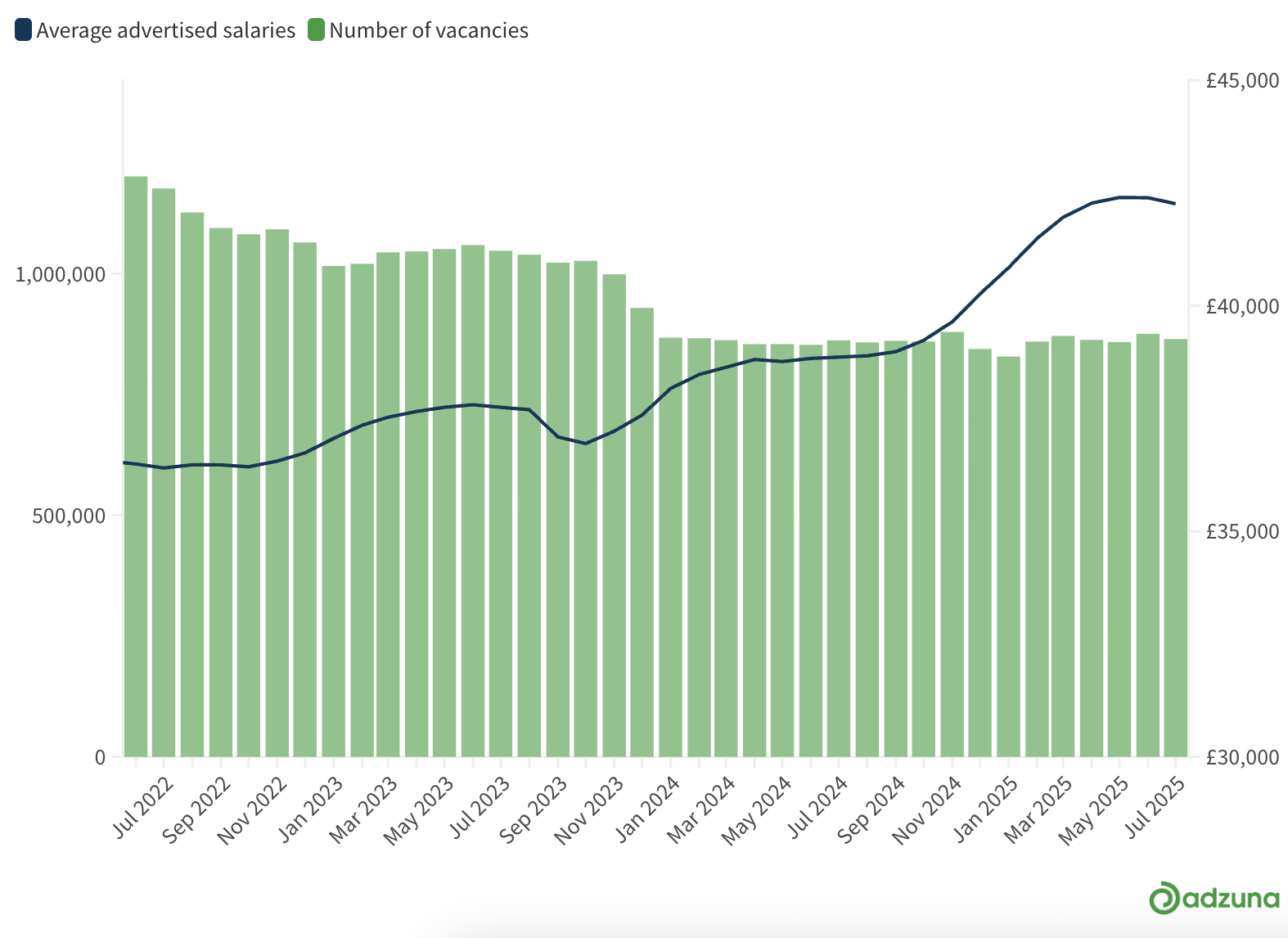
After vacancies saw their strong annual growth for three years in June, the pendulum swung back in July with roles falling -1.24% month-on-month and a mere uptick of +0.31% year-on-year.
Nevertheless, July marks the fifth consecutive month of positive year-on-year growth, coming after 30 months of declines that lasted till this February. Additionally, despite the minor fall, vacancies remain stronger (+4.37%) at 864,705 jobs compared to six months ago in January — typically a peak hiring month — showing resilience as the market moves into mid-year.
Salaries
As inflation rises by more than expected to 3.8%, compounded by the National Minimum Wage increase in April, average advertised salaries continued their annual climb in July, reaching £42,264 – up +8.75% year-on-year but the momentum has softened slightly from the rapid growth recorded before June 2025. Meanwhile, month-on-month, July recorded another marginal drop of -0.31%.
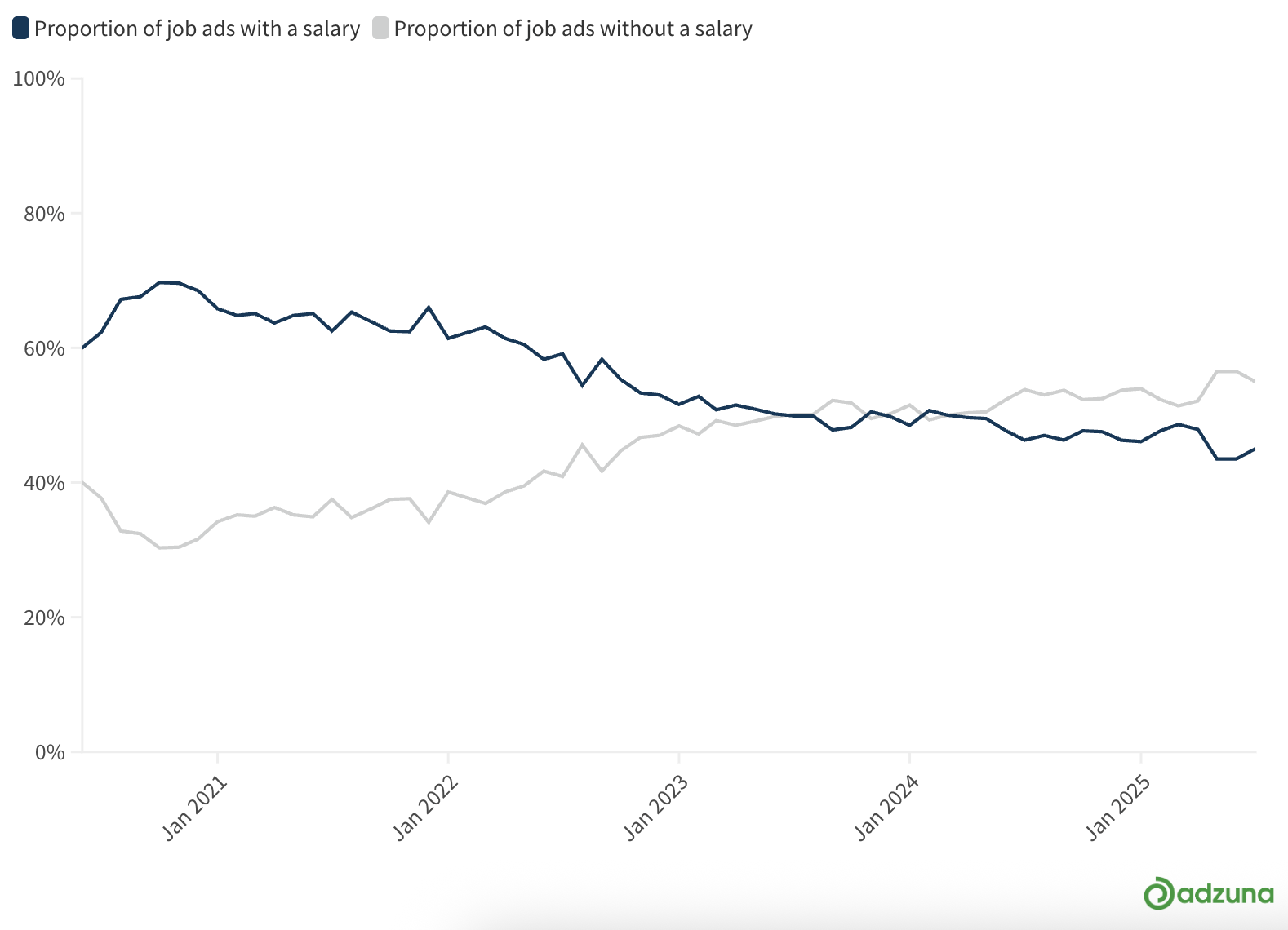
Salary transparency improved, with 45.02% of job ads now including pay details, up from the 43.5% plateau seen across May and June.
Time to fill
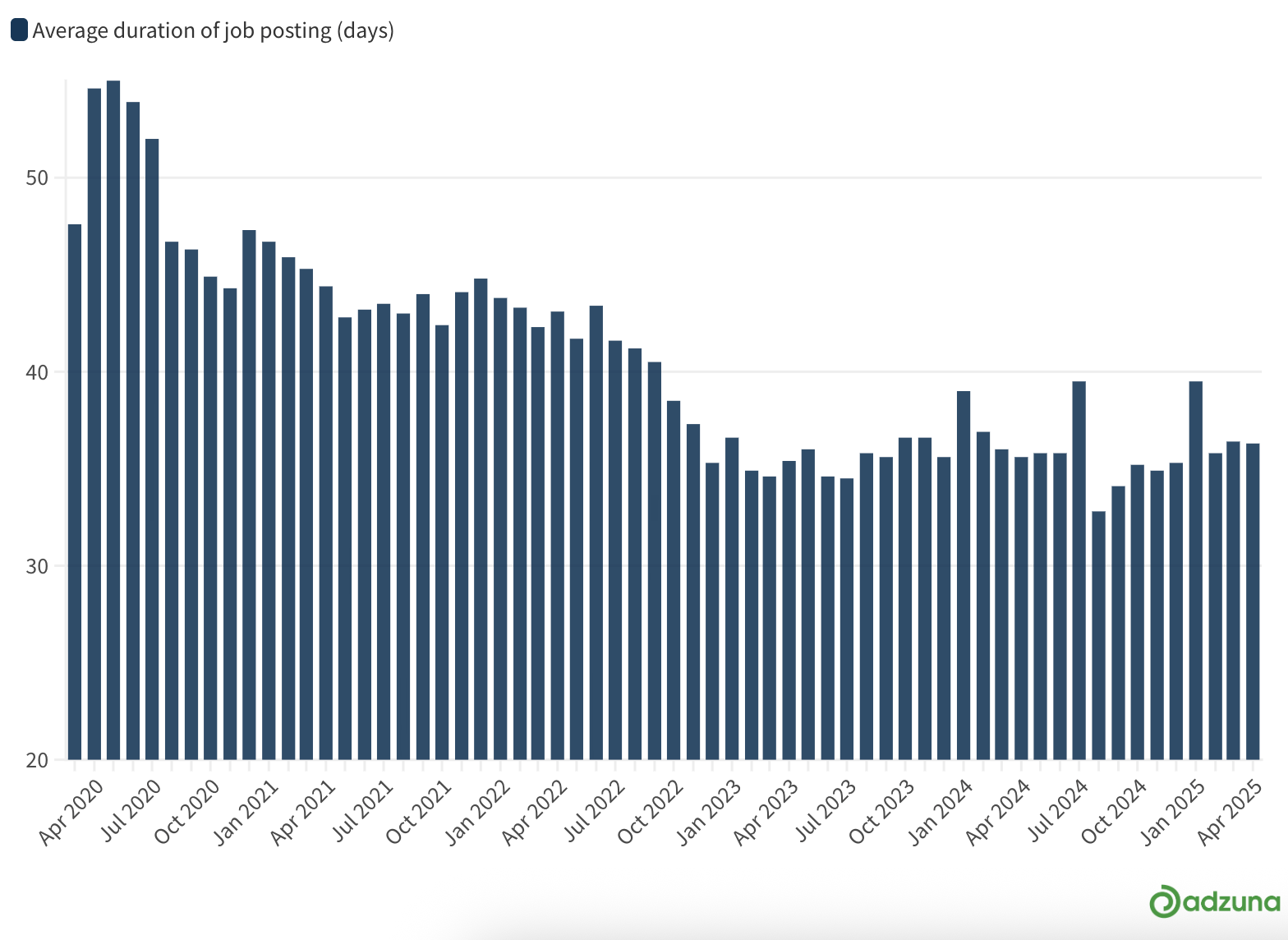
The average time to fill a role shortened to 36.3 days from 36.4 days the month before.
Competition
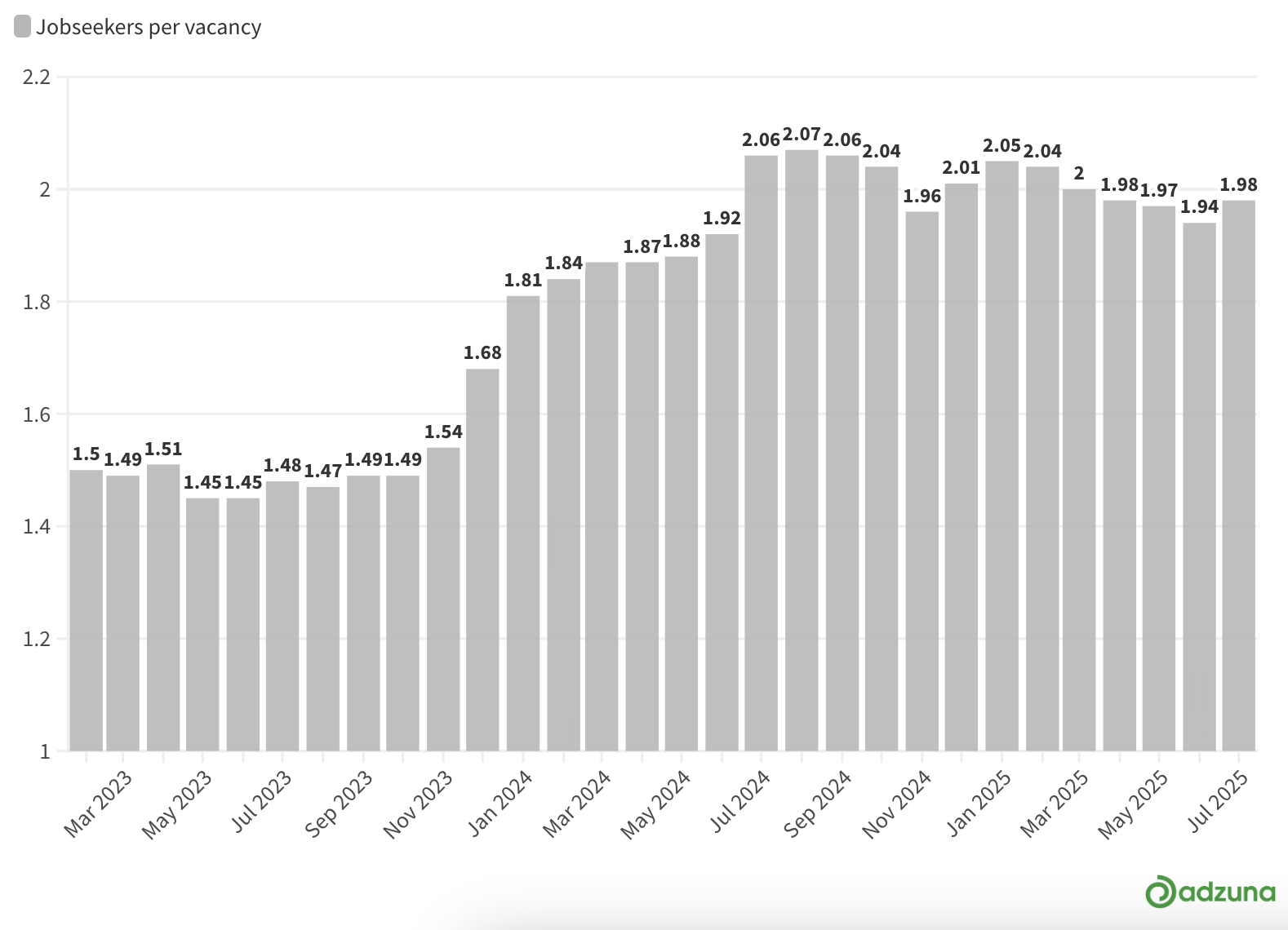
The number of jobseekers per vacancy rose slightly to 1.98, up +0.04 from June.
Hottest cities
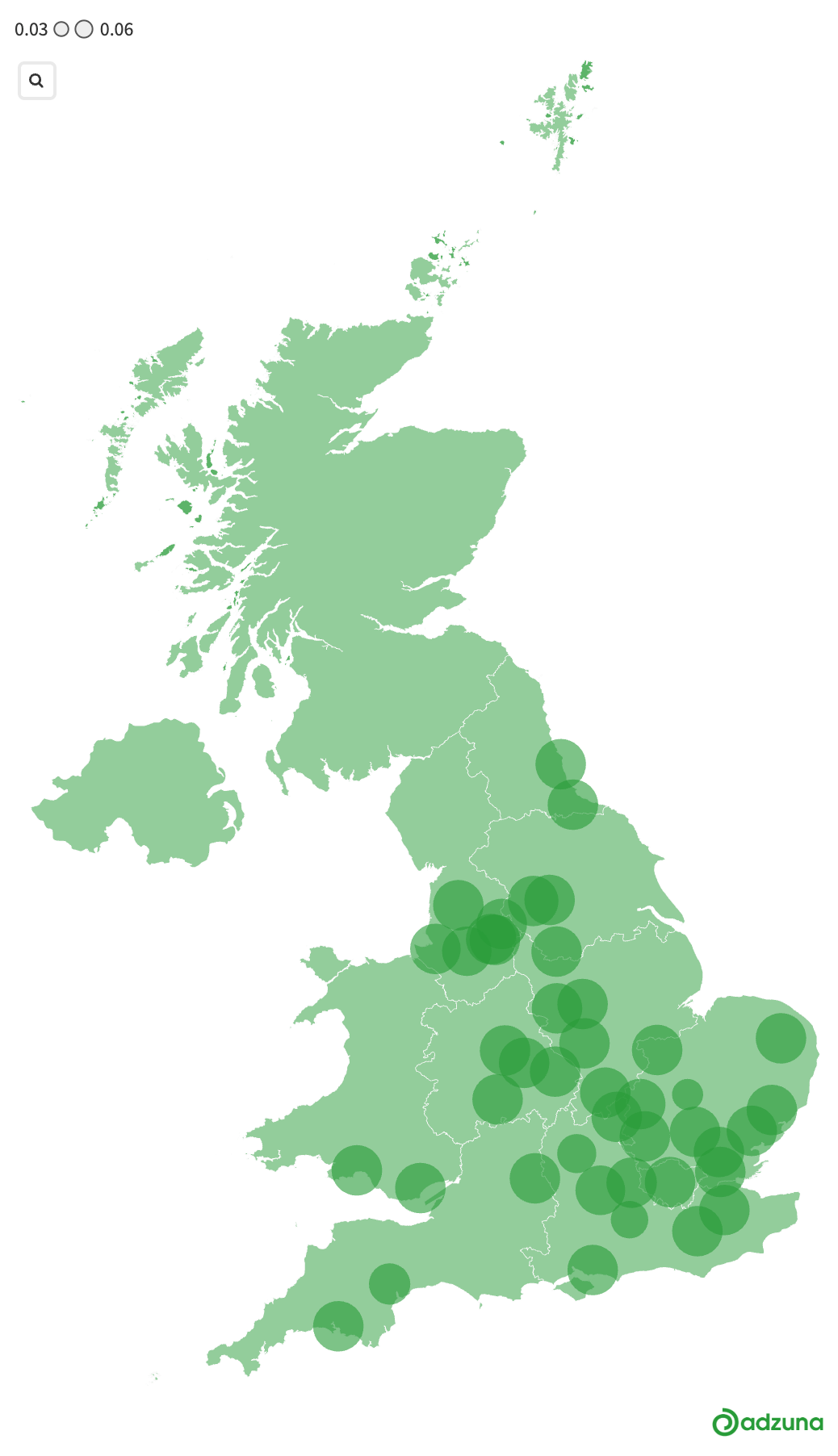
Cambridge remains the top city for job hunters, with the lowest jobseeker to available roles ratio at 0.38, with 6,871 roles available. Guildford comes second with 0.55 and Oxford third with 0.6.
The hardest city to find a role is Bradford, with 8.99 jobseekers per role, followed by Birmingham (5.28) and Luton (5.08).
UK regions
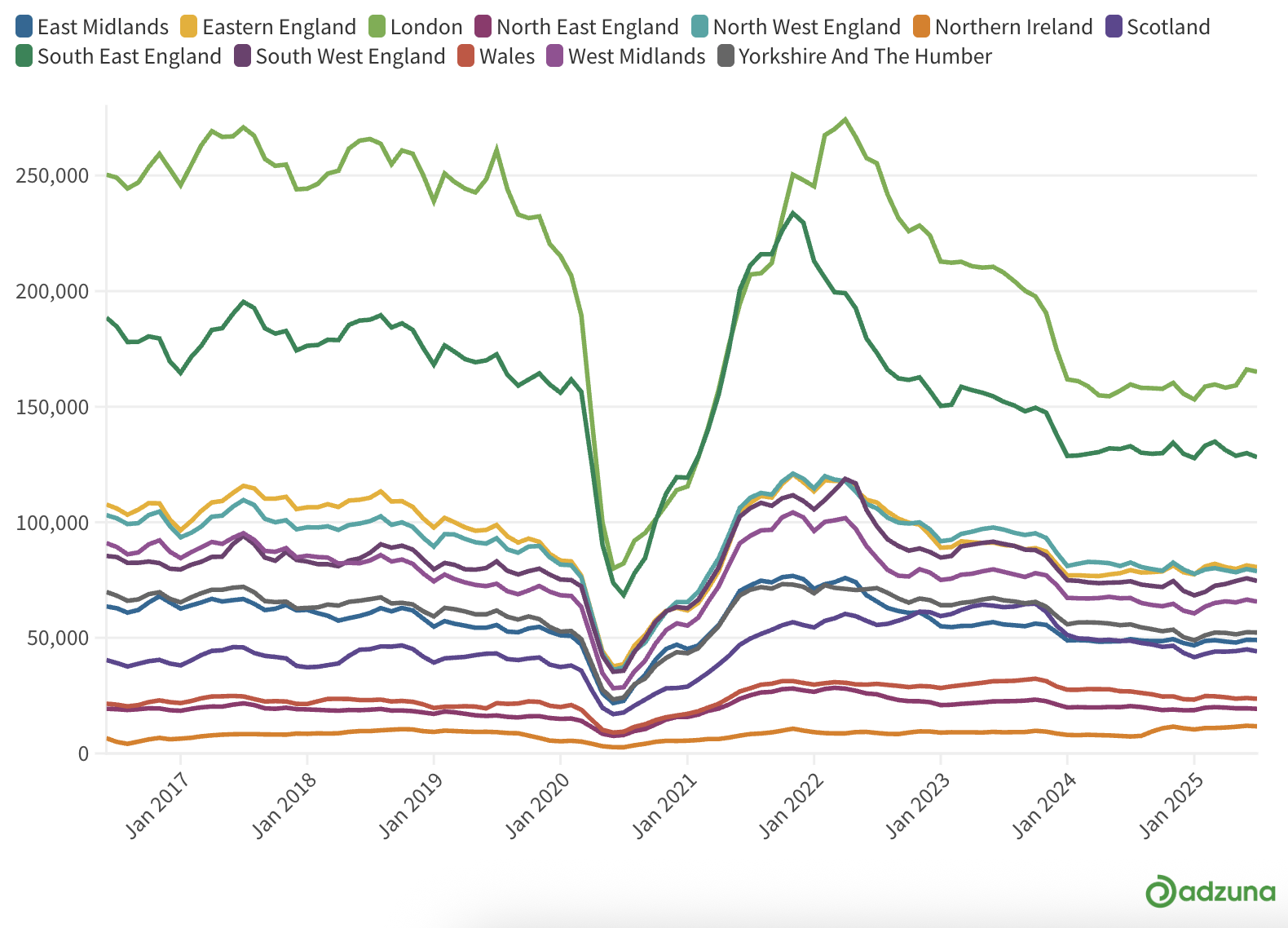
Vacancies fell across all UK regions in July, marking a sharp contrast to the growth seen in June. The steepest month-on-month declines were recorded in Northern Ireland (-2.01%), Scotland (-1.92%), and the South West (-1.49%).
Wales (-11.8%) and Scotland (-9.41%) experienced the largest annual drops, while Northern Ireland recorded the strongest year-on-year growth in job openings, up +59.93% compared to July 2024. This was followed by London (+3.44%) and Eastern England (+1.66%).
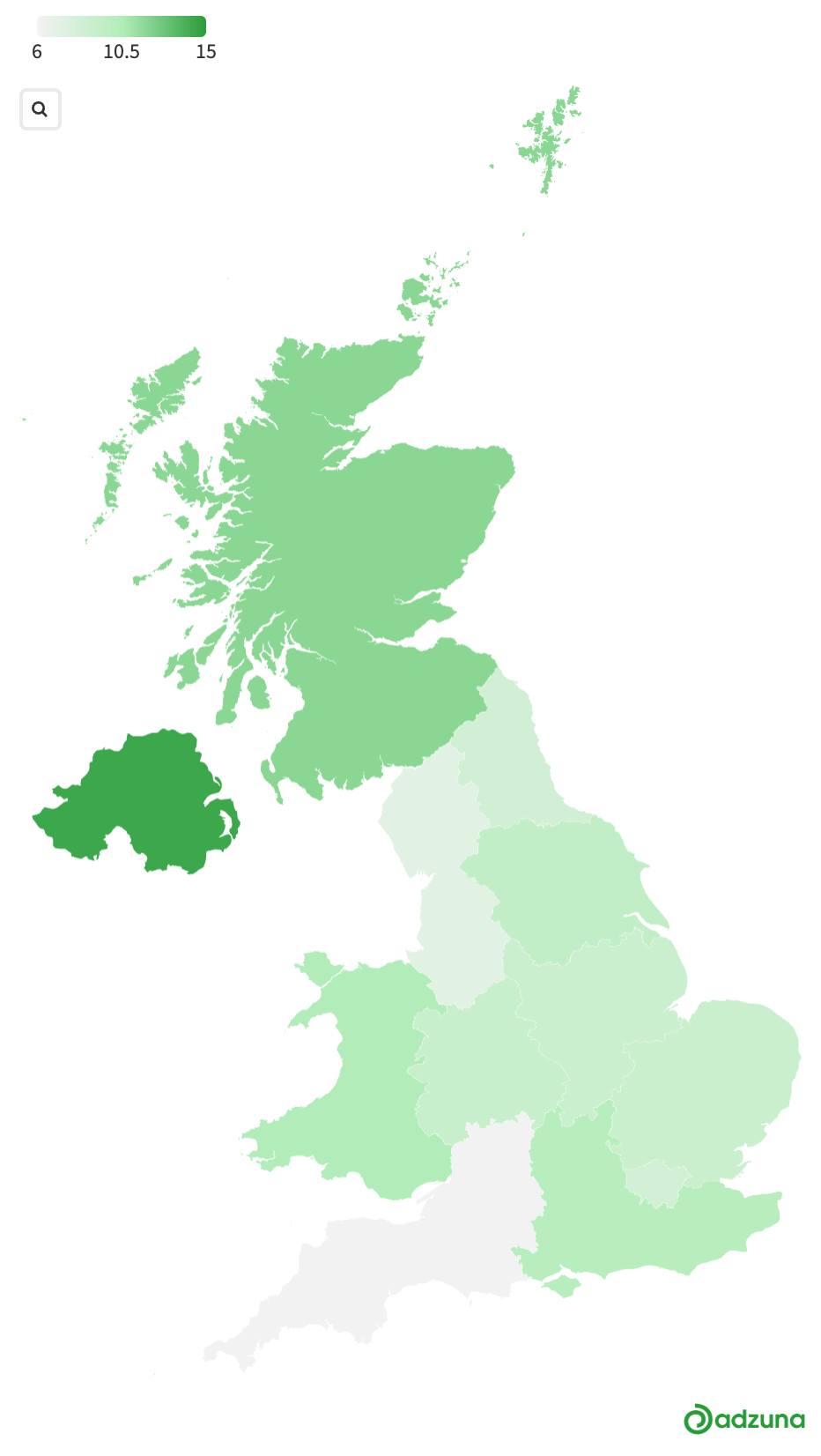
In terms of salary growth, six regions now offer average advertised salaries above £40,000. In terms of annual growth, Northern Ireland once again led the pack with annual wage growth of +14.3% to £40,773 – its fifth consecutive month of double-digit gains. Scotland (+11.78%), Wales (+10.46%) and the South East (+10.05%) also saw strong year-on-year pay increases, although London remains the highest-paying region, with average salaries of £48,410.
UK sectors
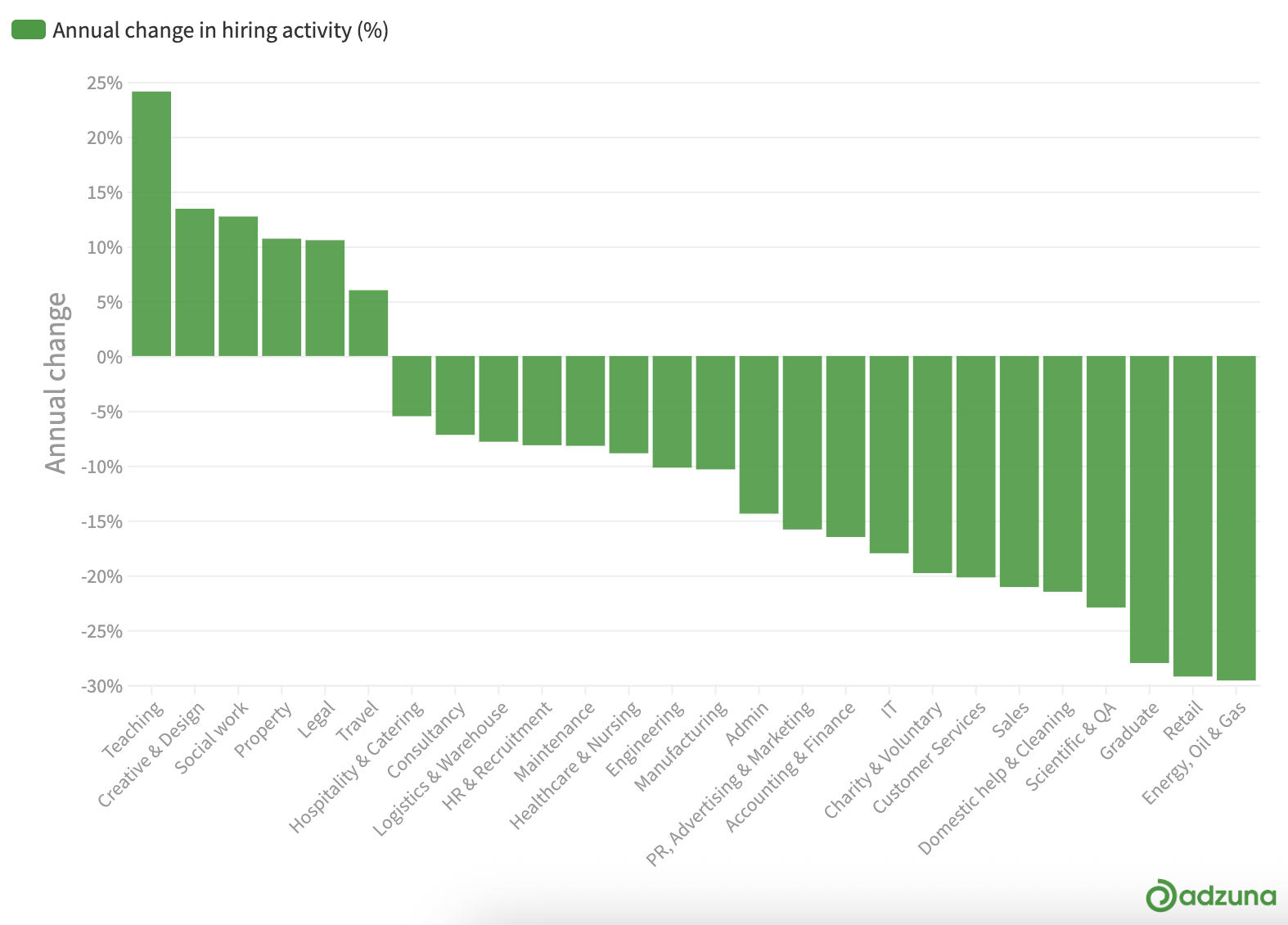
Trade & Construction once again led all sectors with a +11.7% monthly rise, following June’s standout +16% growth. Retail also saw a further rise (+2%) on top of June’s already +7% increase. Creative & Design (+3.65%), HR & Recruitment (+3.41%) and Legal (+2.4%) were among the other sectors posting monthly gains – in positive signs for the wider professional services industries.
Elsewhere, other sectors either stagnated or fell. Healthcare & Nursing roles dropped for the third consecutive month, down -10.34% month-on-month in July and -8.87% year-on-year. Marketing roles, which had grown in May and June, fell -3.01% in July. Other notable monthly declines included Hospitality & Catering (-8.43%), Maintenance (-5.01%), Social Work (-4.66%), and Sales (-2.86%).
Salaries painted a similarly mixed picture. Marketing saw the strongest salary growth of any sector in July, with average pay rising to £42,651 – up +0.99% month-on-month. Customer Services roles saw salaries tentatively increase by +0.86% to £30,678, while Domestic Help & Cleaning rose +0.68% to £28,606. The steepest monthly declines were seen in Maintenance (-1.79%), Teaching (-1.54%) and Travel jobs (-0.9%).
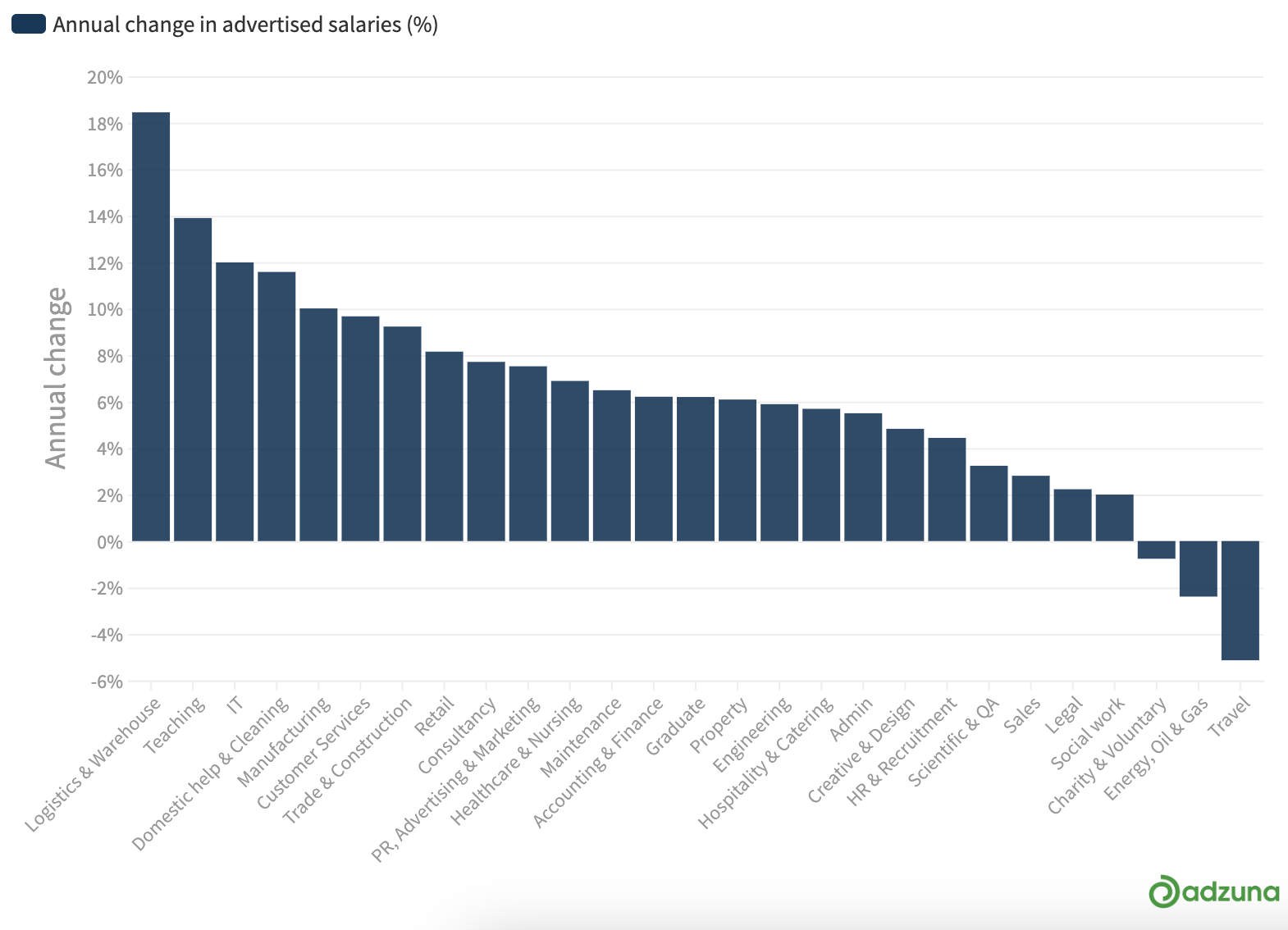
Despite this, year-on-year salary growth remains strong in most areas. Logistics & Warehouse salaries grew +18.5% annually, followed by Teaching (+13.9%) and IT (+12%). In contrast, only two sectors saw annual declines in pay, where both Travel and Energy, Oil & Gas salaries fell again (-5.13% and -2.39% respectively) year-on-year.
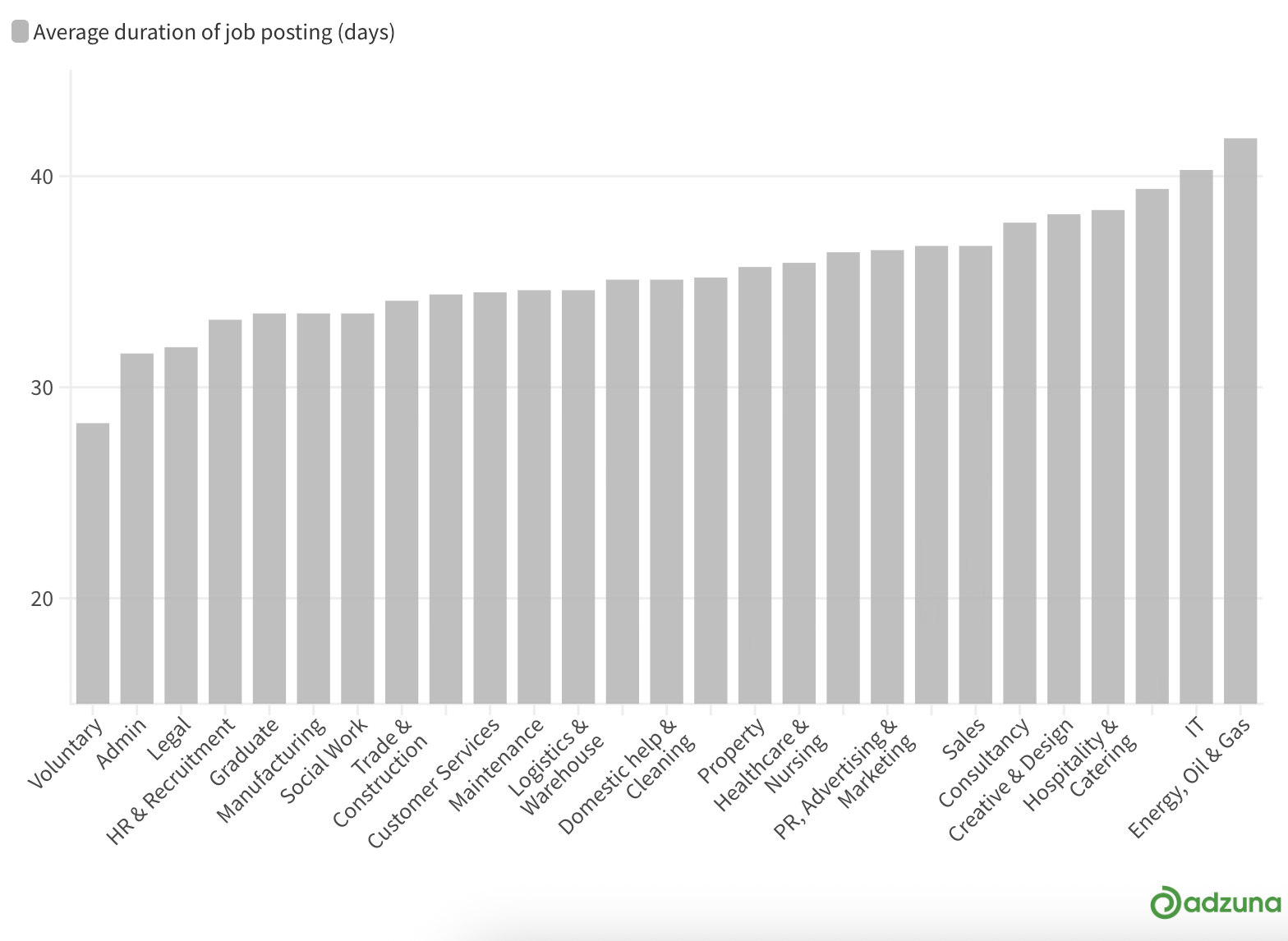
Energy, Oil & Gas roles now take the longest to fill – at 41.3 days, followed by IT (40.3 days). That said, the timeframes for both were shorter than they were the month before, down from 42 days and 42.7 days, respectively.
The biggest slowdown was seen for Teaching roles, which at 39.4 days now take an extra 6.7 days to fill than they did in the previous month (32.7 days). By contrast, Graduate jobs are being filled 5.8 days faster than they were in the previous month, at 33.5 days.
Trending jobs
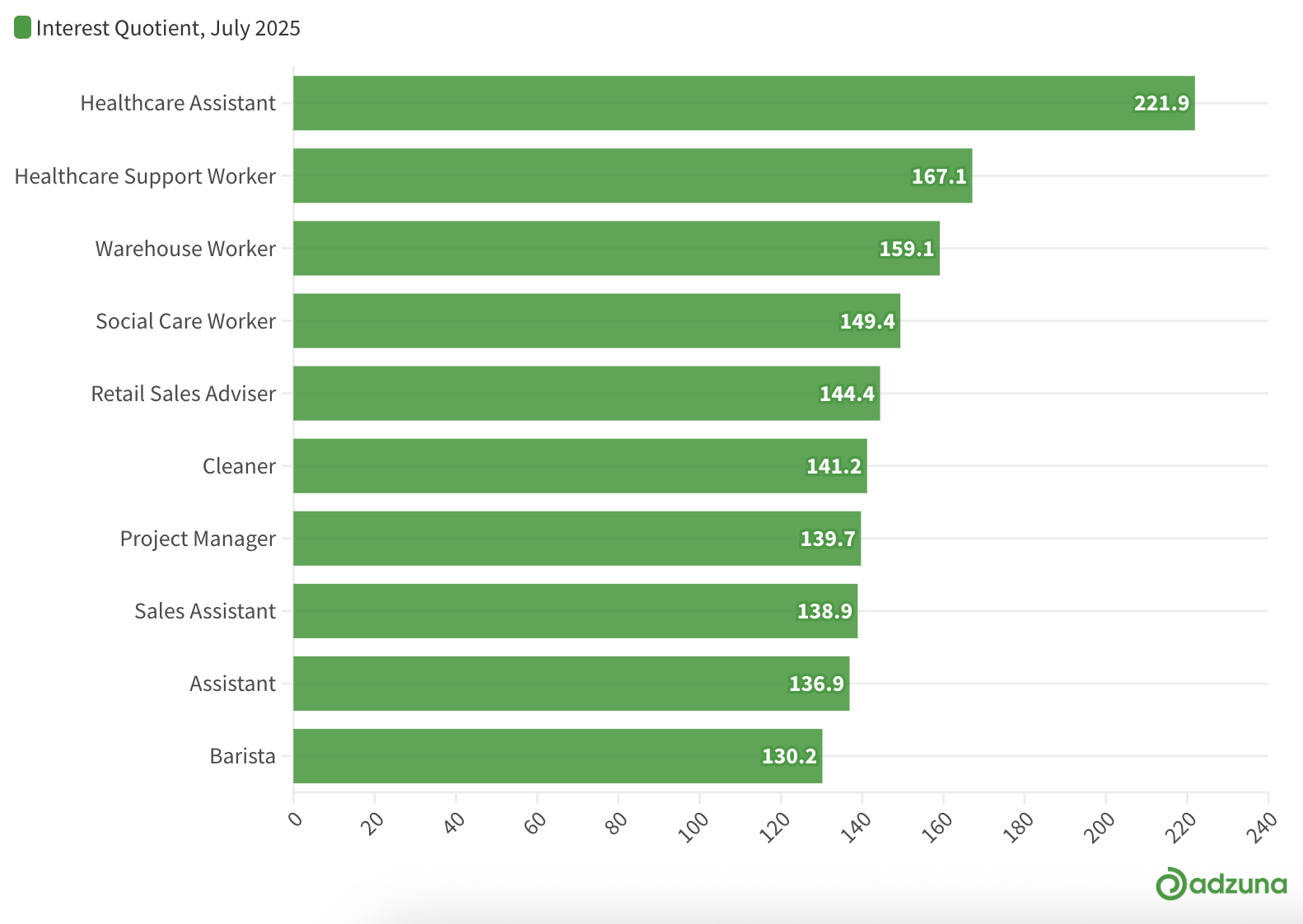
Healthcare Assistant topped Adzuna’s Trending Jobs list in July, climbing from fourth place in June to become the most-viewed ad by jobseekers. It overtook Healthcare Support Worker, which slipped to second after holding the top spot for six consecutive months.
Warehouse Worker returned to third place, as demand for entry-level and frontline roles continues to drive interest. Social Care Worker, which has been consistently in the top five throughout 2025, dropped to fourth, while Retail Sales Adviser – which hasn’t appeared in the top 10 since April – made a re-appearance in fifth. This ranking is based on the Interest Quotient, a metric that tracks how often job postings are viewed relative to other occupations. A higher quotient reflects a stronger interest among jobseekers.
Elsewhere in the top 10, Cleaner, Project Manager, Sales Assistant, and Assistant all featured. As did Barista, which entered the rankings for the first time ever. Notably, Software Developer, Receptionist, Administrator, and Labourer, all of which featured in previous months, dropped out of the July leaderboard.
Methodology
About Adzuna
Adzuna is a smarter, more transparent job search engine used by tens of millions of visitors per month. We love using the awesome power of technology to bring together every job in one place, help match people to better, more fulfilling jobs and keep Britain working.
Adzuna supplies real-time data to the Number 10 Dashboard, the Cabinet Office and Office for National Statistics labour market indices. In 2018, Adzuna won the contract to run Find a job, one of the British government’s most used online services.
Adzuna.co.uk was founded in 2011 by Andrew Hunter and Doug Monro, formerly of eBay, Gumtree, Qype and Zoopla and is backed by leading Venture Capital firms LocalGlobe, Index Ventures and Smedvig Capital.
We’ve spent a decade developing smarter, more transparent job search so jobseekers worldwide (we’re in 19 countries) can zero in on the right role faster.
About the Job Market Report
Adzuna has the most complete index of UK job vacancies covering all regions in the UK. The technology collects every job vacancy advertised online in the UK from over 1,000 sources. This data is then normalised, de-duplicated, mix-adjusted and outliers are removed in real time to give users an accurate, complete, up to the minute view of the job market.
Claimant count data is based on the latest Labour Market Statistics released by the ONS. The city areas referred to in this study are the top 50 cities in the UK, ranked by comparing the job vacancies in Adzuna’s comprehensive search index of over 1,000,000 live jobs to the number of claimants in each city from the latest ONS data. The full Jobseeker’s Allowance claimant count statistics are available for download here: www.nomisweb.co.uk.
The interest quotient for key roles is calculated by comparing how many views job postings for different occupations on Adzuna receive over a given month and comparing this to the overall job posting views over the same period. It provides a proxy for talent supply in the jobs market.
For more granular data breakdowns at a local authority level, job title, or skill level, please contact our labour market intelligence division, Adzuna Intelligence.